
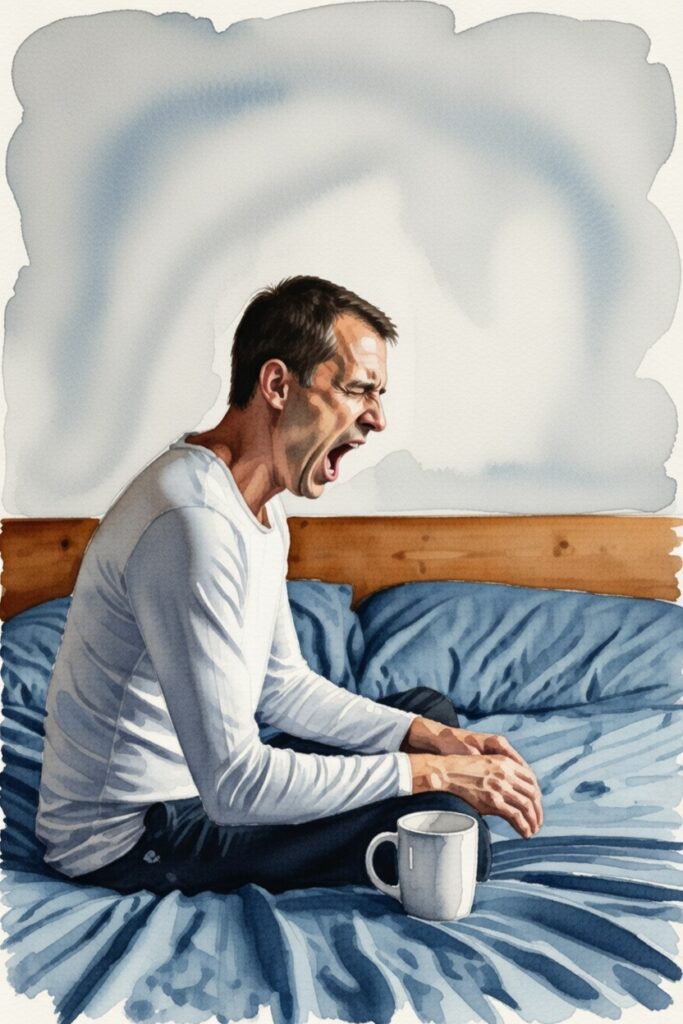
Always being tired even when you sleep enough is one of the most common signs of burnout.
You go to bed on time, sleep seven or eight hours, and still wake up exhausted.
If this sounds familiar, the problem may not be sleep at all — it may be nervous system overload
You go to bed on time.
You sleep seven or eight hours.
And you still wake up exhausted.
If you’re always tired even when you sleep enough, the problem may not be sleep at all.
For many people, persistent exhaustion is a sign of burnout — not laziness, not lack of discipline, and not poor sleep habits.
Burnout fatigue feels different from normal tiredness. It lingers, follows you through the day, and doesn’t disappear after rest.
That’s because burnout drains more than physical energy. It affects mental capacity, emotional regulation, and nervous system balance.
It’s not just physical tiredness
Physical tiredness usually improves with rest. After sleep, your body recovers and energy returns.
Burnout fatigue doesn’t work that way.
Instead, it often feels like:
Heavy limbs that make simple movement harder
Brain fog that slows thinking and focus
Low motivation even for things you care about
Emotional numbness or irritability
The body may be rested, but the system still feels depleted.
This happens when your nervous system has been under sustained stress for too long. The body shifts into a state of energy conservation, reducing output to protect itself.
You’re not failing. Your system is adjusting.
Your nervous system never fully switches off
One reason people are always tired even when they sleep enough is that stress continues in the background — even during rest.
You might be sleeping, but mentally you’re still carrying pressure:
Work expectations
Financial concerns
Family responsibility
Unresolved emotions
Constant digital stimulation
When the nervous system remains on alert, sleep restores the body but not the mind.
The result is waking up tired despite doing everything “right.”
Burnout creates internal load that sleep alone cannot resolve.
This is closely related to functional burnout, in which people continue to perform while feeling internally drained.
👉 Internal link: Functional Burnout: When You’re Still Performing but Empty Inside
Burnout fatigue feels different from laziness
Many people misinterpret burnout exhaustion as a lack of discipline.
They push harder, add routines, increase caffeine, or blame themselves for not trying enough.
But burnout fatigue has distinct patterns:
Weekends don’t fully refresh you
Vacations provide only temporary relief
Small tasks feel disproportionately difficult
You need effort just to start things
Motivation disappears before energy does
This isn’t laziness.
It’s a nervous system overload.
Your brain is trying to reduce demand because capacity has been exceeded.
Understanding this removes unnecessary self-criticism, which often worsens exhaustion.
Emotional load consumes energy, too
Energy isn’t only physical. Emotional and cognitive load also require resources.
Holding stress, suppressing feelings, making constant decisions, and staying mentally alert all consume energy.
Over time, this invisible load accumulates.
Many people experiencing burnout continue functioning outwardly while internally managing:
Uncertainty
Responsibility
Pressure to perform
Fear of disappointing others
Identity tied to productivity
This ongoing effort drains energy even without visible activity.
Emotional numbness often appears as a protective response.
Emotional Numbness Is a Burnout Symptom
When emotions flatten, people often report feeling tired all the time — not because they’re inactive, but because they’ve been carrying too much.
Why rest alone doesn’t fix burnout fatigue
Rest is necessary, but burnout recovery requires more than sleep.
If the source of exhaustion is ongoing mental load, returning to the same environment recreates the same depletion.
This is why people can sleep well yet still feel exhausted.
Recovery often involves reducing demand rather than increasing recovery time.
That might include:
Setting clearer boundaries around work
Reducing constant notifications
Sharing responsibility instead of carrying it alone
Allowing emotional expression instead of suppression
Creating slower routines that signal safety to the nervous system
Burnout improves when the load becomes sustainable, not when productivity increases.
Small tasks feeling overwhelming is a signal
A common sign of burnout is when simple actions feel disproportionately difficult.
Replying to a message. Starting a small task. Making everyday decisions.
These experiences are not character flaws. They reflect reduced cognitive bandwidth.
When your margin is small, everything feels bigger.
This is why many people say burnout makes small tasks feel like mountains.
The solution is not forcing normal output but restoring capacity gradually.
What actually helps burnout exhaustion
Burnout recovery often looks quieter than people expect.
Instead of dramatic change, it involves small adjustments that reduce pressure on the nervous system.
Helpful approaches include:
Lowering expectations temporarily
Introducing gentle routines rather than strict productivity systems
Creating boundaries that protect recovery time
Prioritising emotional processing over constant distraction
Allowing slower pacing without self-judgement
The goal isn’t to eliminate effort. It’s to restore balance between effort and recovery.
Energy returns when safety increases.
If you’re always tired, your body is communicating
Persistent exhaustion is rarely random.
It’s information.
Your system may be signalling that something about your current pace, load, or expectations is unsustainable.
Burnout doesn’t mean you’re weak. It means your capacity has limits — like everyone’s.
Listening earlier often prevents deeper depletion later.
If you’re always tired even when you sleep enough, consider that rest isn’t failing. It may simply be incomplete.
Your body isn’t broken.
It’s protecting you.
And protection is the first step toward recovery.
According to the World Health Organisation, burnout is linked to chronic workplace stress.
Link “World Health Organisation” to:
https://www.who.int/.