
The Difference Between Stress and Burnout
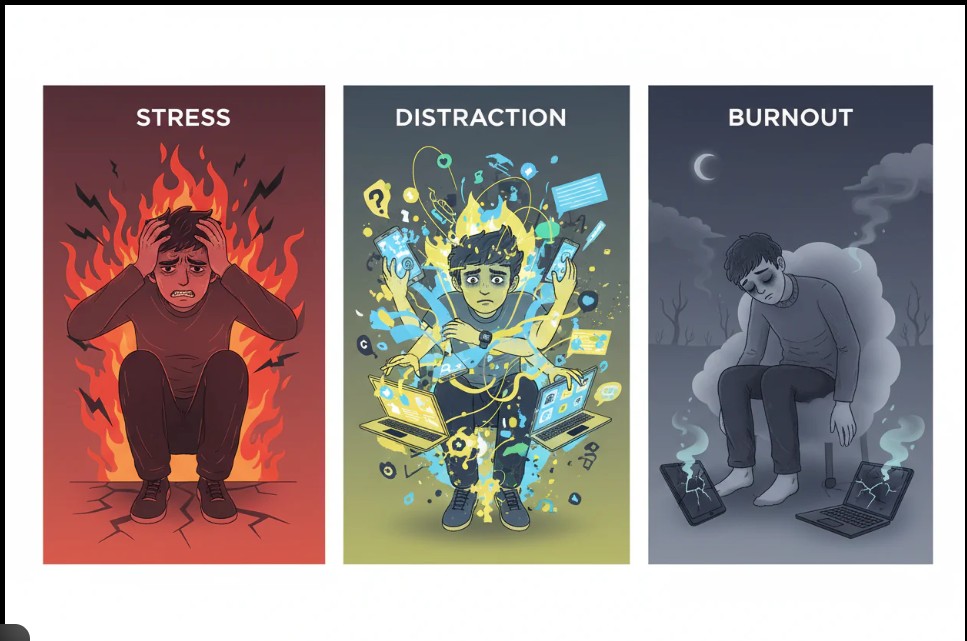
The difference between stress and burnout is often misunderstood. The words are used interchangeably, yet they describe very different experiences.
Both involve pressure. Both can feel exhausting. Both affect mood, focus, and daily functioning.
But one still contains energy.
The other reflects depletion.
Understanding that difference changes how recovery works.
What stress actually is
Stress happens when demands exceed comfort — but not capacity.
You may feel stretched, busy, or mentally overloaded, yet motivation remains beneath the surface. There is tension, but also movement. You’re still trying, still caring, still pushing toward outcomes.
Common stress experiences include:
Feeling rushed
Difficulty switching off
Temporary fatigue
Heightened irritability
Thinking constantly about responsibilities
Stress is uncomfortable, but it’s often temporary. When pressure decreases, the nervous system resets and energy gradually returns.
Stress signals that something is demanding attention. It doesn’t necessarily mean something is broken.
In many cases, stress resolves with rest, support, or time.
Burnout is different
Burnout develops when pressure continues without meaningful recovery.
It isn’t simply having too much to do. It’s giving too much for too long while internal resources shrink. Over time, effort begins to feel disconnected from results.
You may still function. You may still meet responsibilities. But the experience changes.
Energy doesn’t bounce back. Motivation feels distant. Tasks that once felt purposeful feel mechanical.
Burnout often includes:
Emotional numbness
Chronic fatigue that rest doesn’t fix
Loss of meaning
Detachment from outcomes
Reduced tolerance for demands
Feeling constantly “behind” internally
Stress involves activation. Burnout involves depletion.
That distinction matters.
Stress contains urgency. Burnout contains exhaustion.
During stress, the nervous system is activated. There may be anxiety, pressure, or tension, but movement continues. You still believe effort will improve things.
Burnout shifts that belief.
The internal message becomes quieter but heavier: What’s the point?
This doesn’t mean people stop caring about life. It means their capacity to care continuously has been exhausted.
Where stress pushes forward, burnout slows down.
Where stress says, “I need a break,” burnout says, “I don’t feel anything changing.”
Why rest helps stress but not burnout
Stress responds well to recovery because baseline capacity remains intact. When pressure lifts, the system returns toward balance.
Burnout lowers that baseline.
Two days off may reduce fatigue slightly, but the underlying depletion stays. People often notice that weekends, holidays, or short breaks provide only temporary relief.
The workload might decrease, yet energy doesn’t fully return.
This creates confusion. Many people assume they are resting incorrectly or lacking discipline.
In reality, they are applying stress solutions to burnout conditions.
Burnout recovery requires reducing pressure — not only pausing it.
The emotional difference
Stress tends to feel intense.
Burnout tends to feel flat.
With stress, emotions are heightened. You may feel overwhelmed, worried, reactive, or frustrated. There is too much happening internally.
With burnout, emotions often dull. People describe feeling detached, numb, or distant from things that once mattered.
This emotional shift is protective. The nervous system reduces engagement to conserve energy.
It isn’t indifference. It’s conservation.
Burnout often includes emotional numbness, chronic fatigue, and detachment from outcomes. Many people notice that emotional numbness is a burnout symptom, indicating that the nervous system protects itself from overload.
The key difference in one sentence
Stress says:
“I have too much on my plate.”
Burnout says:
“I don’t have anything left to give.”
Both are valid responses to pressure. But they require different support.
Stress benefits from rest, organisation, and short-term adjustments.
Burnout benefits from sustained changes — boundaries, reduced expectations, environmental shifts, and permission to move more slowly.
Why misunderstanding makes recovery harder
When burnout is treated like stress, people often increase their effort rather than reduce their load.
They try productivity systems. More sleep. Better routines. More motivation.
When improvement doesn’t happen, self-criticism grows.
The narrative becomes personal: I should handle this better.
But burnout isn’t a character issue. It’s a capacity issue.
Misidentifying the problem delays relief.
Accurate language creates realistic expectations for recovery.
Burnout is a signal, not a failure
Stress signals urgency. Burnout signals depletion.
Both are forms of communication from the nervous system. Neither exists to punish or label someone as weak.
Burnout often appears in people who are responsible, adaptable, and committed. It reflects sustained effort without sufficient relief—not a lack of resilience.
Listening to the signal allows adjustment.
Ignoring it prolongs exhaustion.
Recovery starts with recognising where you are
Understanding the difference between stress and burnout doesn’t solve everything immediately. But it changes the direction of support.
If you’re stressed, you may need temporary relief.
If you’re burned out, you may need a structural change.
That change doesn’t have to be dramatic. Often it begins with smaller shifts — fewer expectations, more margin, honest acknowledgement of limits.
Energy returns gradually when pressure becomes sustainable.
And recognising the difference is often the first step toward that shift.
According to the World Health Organisation, burnout is linked to chronic workplace stress.
Link “World Health Organisation” to:
https://www.who.int/.
Pingback: Why Burnout Makes Small Decisions Feel Impossible – modernburnout.com.au
Pingback: Why Burnout Makes Small Decisions Feel Impossible – modernburnout.com.au
Pingback: Rest Doesn’t Work When Guilt Is Still Present – modernburnout.com.au
Pingback: You Feel Worse After Rest: The Hidden Layer of Burnout – modernburnout.com.au
Pingback: Why Burnout Often Feels Like Irritation, Not Sadness - modernburnout.com.au
Pingback: Why Some Fathers Feel Distant After a Baby Arrives (And Why It’s Normal)