
You’re not lazy — you’re overloaded.
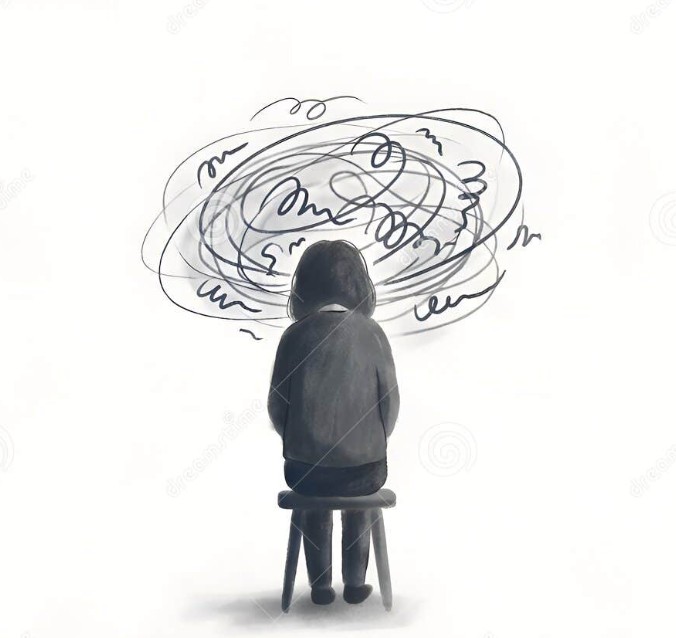
What looks like procrastination from the outside often feels like paralysis from the inside. Tasks that used to feel simple suddenly require enormous effort. Decisions feel heavier. Starting becomes harder than finishing.
Many people interpret this as a motivation problem. They assume they’ve become undisciplined or distracted.
But burnout changes how the brain and nervous system operate. What appears as laziness is often cognitive and emotional overload.
You’re not avoiding life. Your system is trying to protect itself.
Burnout reduces capacity, not character
When burnout develops, internal capacity shrinks. Energy, focus, emotional tolerance, and decision-making ability all decrease.
The expectations around you may stay the same — work, family, responsibilities, social roles — but the resources you use to meet them are lower.
That mismatch creates friction.
You may notice:
Starting tasks takes longer
Simple choices feel exhausting
You delay things you care about
You feel guilty even while resting
You question your discipline
This isn’t a failure of willpower. It’s a reduction in available energy.
Burnout isn’t about not wanting to try. It’s about not having enough margin to keep trying the same way.
Overload is often invisible
One reason burnout is mislabelled as laziness is that much of the load people carry isn’t visible.
Mental tracking
Emotional support for others
Constant decision-making
Anticipating problems
Holding responsibility without relief
This ongoing cognitive effort quietly drains capacity. There may not be a clear event that explains the exhaustion — just a gradual sense that everything feels heavier than it should.
From the outside, nothing dramatic happened. From the inside, the system has been running at high output for too long.
Overload accumulates.
Survival mode changes how action works
When the nervous system stays in survival mode, priorities shift. Efficiency decreases because the brain is focused on managing stress rather than optimising performance.
Initiation — the ability to start — is among the first functions affected.
You may sit in front of a task knowing it matters and still feel unable to begin. That gap between intention and action creates shame, which adds more emotional load.
You may sit in front of a task knowing it matters and still feel unable to begin. Many people notice that small tasks feel like mountains during burnout, which shows how overload affects capacity.
The problem compounds.
This is why telling yourself to “just be disciplined” rarely works during burnout. Discipline requires capacity. Survival mode reduces it.
Rest can feel pointless when overload stays
Many people experiencing burnout say rest doesn’t help. They stop working, but the exhaustion remains.
That’s because rest without reduced pressure doesn’t signal safety to the nervous system.
If your mind is still tracking responsibilities, anticipating demands, or feeling behind, rest becomes passive waiting rather than recovery.
You’re not lazy for struggling to recharge. Your system hasn’t experienced enough relief yet.
Recovery begins when expectations shift, not only when activity stops.
The guilt narrative keeps burnout in place
Calling yourself lazy creates a story that makes burnout harder to resolve. Guilt increases internal pressure, which further reduces capacity.
You push harder. You expect more. You criticise yourself for normal burnout responses.
The nervous system interprets that as an additional threat.
Over time, self-judgement becomes part of the load you’re carrying.
Replacing the narrative matters. Not as positive thinking, but as an accurate understanding.
You’re not lazy. You’re overloaded.
That shift reduces friction and allows more realistic adjustments.
Small reductions in load create momentum
Recovery doesn’t require removing everything at once. It often begins with small reductions that create breathing room.
Lowering one expectation
Delaying a non-essential task
Asking for help
Shortening to-do lists
Accepting slower progress
These changes may seem minor, but they signal safety. When the nervous system detects less pressure, capacity gradually returns.
Action becomes easier again — not because you forced yourself, but because the system has more resources available.
Momentum follows relief.
Strength without support leads to burnout
Many people experiencing burnout are highly responsible. They adapt, cope, and continue functioning long after their capacity drops.
This strength is often praised externally while the internal cost remains unseen.
Over time, being strong without support becomes overwhelming.
Burnout isn’t proof that you can’t handle life. It’s evidence that you’ve been handling too much for too long.
Recognising that changes the question from What’s wrong with me? to What has been too heavy?
That question opens the possibility of adjustment instead of self-criticism.
You don’t need more discipline — you need more margin
Productivity advice often assumes stable energy. Burnout challenges that assumption.
What helps isn’t harsher routines or stricter systems. It’s margin — the space where demand is temporarily lower than capacity.
Margin allows recovery. Recovery restores initiation. Initiation rebuilds confidence.
The cycle reverses.
You’re not lazy. You’re responding to overload in a human way.
And when the load changes, behaviour changes with it.
According to the World Health Organisation, burnout is linked to chronic workplace stress.
Link “World Health Organisation” to:
https://www.who.int/.
Pingback: Burnout Isn’t Weakness — It’s a Signal: What Exhaustion Is Trying to Tell You