
Why Some Fathers Feel Distant After a Baby Arrives
Some fathers feel distant after a baby arrives — and almost no one talks about it.
A baby is born, and life fills instantly with noise, routines, responsibility, and expectation. From the outside, it looks like connection should come naturally.
You’re supposed to feel overwhelming love. Immediate bonding. Instant certainty.
But for some fathers, what shows up instead is distance.
Not because they don’t care.
Not because they don’t love their child.
But because everything changed at once.
And emotions don’t always move at the same speed as life.
Life Doesn’t Just Add Something — It Replaces Something
Becoming a father doesn’t simply add a baby to your life.
It replaces:
- Your old routines
- Your freedom
- Your flexibility
- Parts of your identity
- The version of yourself you understood
That loss is rarely acknowledged.
There’s a celebration. There’s expectation. There’s responsibility.
But there’s very little space to say: “Something I knew disappeared.”
When identity shifts quickly and silently, disorientation follows. And disorientation can feel like distance.
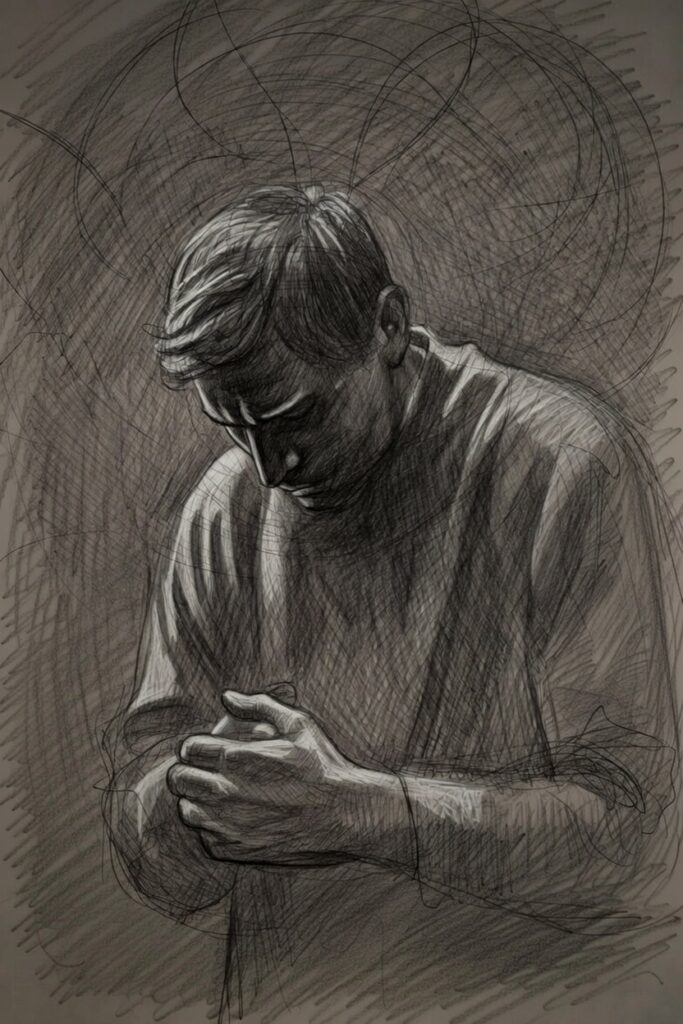
The Partner–Baby Bond Can Feel Isolating
In the early weeks and months, many fathers notice something difficult to explain.
The baby is deeply connected to their partner through feeding, comfort, physical closeness, and biological bonding.
Meanwhile, the father often stands slightly outside that bond.
Watching.
Helping.
Supporting.
But not always feeling central.
That doesn’t mean jealousy.
It doesn’t mean resentment.
It often means uncertainty about where you now fit.
And uncertainty can create emotional hesitation.
Exhaustion Blunts Emotion
Sleep deprivation doesn’t just make you tired.
It narrows your emotional range.
When you’re running on broken sleep:
- Joy feels quieter
- Patience feels thinner
- Connection feels delayed
- Emotions feel muted
This flattening can easily be mistaken for emotional distance.
In reality, your nervous system may simply be overloaded.
If you’ve also noticed irritability or emotional dullness, you might relate to:
Burnout doesn’t always look like sadness. Sometimes it looks like distance.
Distance Is Often Self-Protection
When everything feels overwhelming, the mind looks for ways to cope.
For some fathers, coping shows up as emotional withdrawal:
- Going quiet
- Staying busy
- Throwing yourself into work
- Avoiding vulnerable conversations
Not because you don’t care — but because it feels safer to step back than to feel everything at once.
Distance becomes a buffer.
And buffers are protective mechanisms, not character flaws.
Distance Is Not the Absence of Love
This part matters.
When fathers feel distant after a baby arrives, they often assume something is wrong with them.
But distance does not mean:
- You love your child less
- You’re permanently disconnected
- You’re incapable of bonding
- You’re failing
Bonding doesn’t look identical for everyone.
And it doesn’t follow a strict timeline.
For many dads, connection grows gradually — through routines, shared time, small interactions, and quiet repetition.
Love sometimes builds through presence, not intensity.
Burnout Can Quietly Influence Fatherhood
If you were already stretched before the baby arrived — through work pressure, responsibility, or mental load — the arrival of a newborn can tip the system into overload.
High-functioning burnout often looks like continuing to perform while internally disconnecting.
If that resonates, you may want to read:
Understanding whether you’re dealing with stress or burnout can shift how you interpret your emotional experience.
Sometimes distance isn’t about fatherhood at all — it’s about depletion.
Connection Often Returns Quietly
For fathers who experience distance, connection rarely arrives as a dramatic emotional breakthrough.
It shows up subtly:
A small moment of pride.
A protective instinct.
A quiet attachment you didn’t notice forming.
A routine that suddenly feels meaningful.
And one day, you realise the distance has softened.
Not because you forced it.
Not because you judged yourself into it.
But because time, repetition, and presence did their work.
If This Feels Familiar
If you’ve felt distant after becoming a father, hear this clearly:
You’re not broken.
You’re not disconnected beyond repair.
You’re not failing.
You’re adjusting to a life that changed faster than emotions can process.
Adjustment takes time.
Distance doesn’t mean you’re gone.
Sometimes it’s simply the space between who you were and who you’re becoming.
According to the World Health Organisation, burnout is linked to chronic workplace stress.
Link “World Health Organisation” to:
https://www.who.int/.