
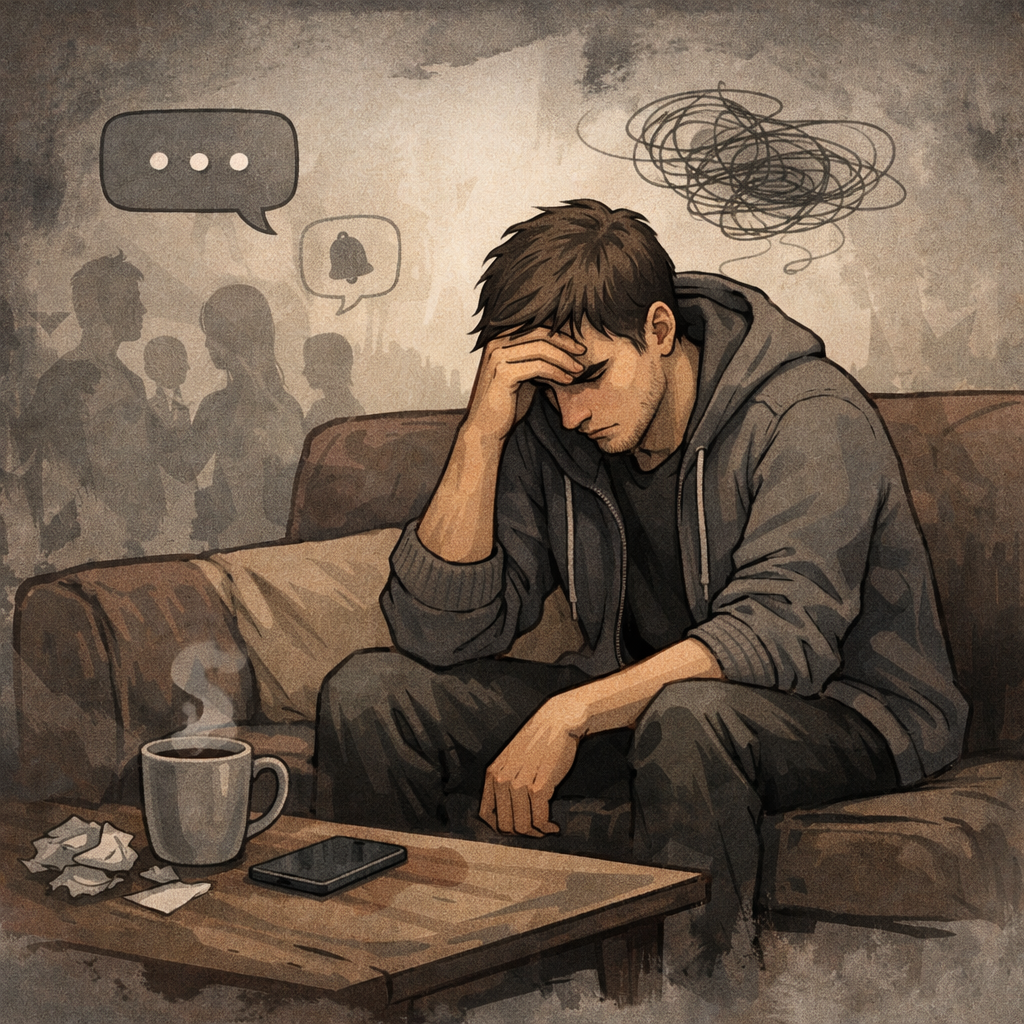
Why You Don’t Want to Talk to Anyone During Burnout. Why you don’t want to talk to anyone during burnout can feel confusing — especially if you’re normally someone who stays connected and supportive. And What It Really Means?
Why you don’t want to talk to anyone during burnout isn’t about being antisocial, rude, or distant. It’s often a sign that your internal capacity is overloaded.
Burnout doesn’t just exhaust your body. It drains your emotional bandwidth.
When you’re burned out, even simple conversations can feel like effort. Not because you don’t care — but because you don’t have anything left to give.
And that can feel confusing.
Especially if you’re usually someone who shows up, supports others, and stays connected.
Burnout Reduces Emotional Capacity
Burnout narrows your internal margin.
Your nervous system shifts into survival mode. Instead of feeling open and responsive, you feel guarded, flat, or overstimulated. Conversation requires presence — and presence requires energy.
When your system is depleted, social interaction becomes another demand.
You may notice:
- Ignoring messages longer than usual
- Avoiding phone calls
- Feeling irritated when someone asks how you are
- Wanting silence more than connection
- Feeling relieved when plans get cancelled
This isn’t laziness.
It’s conservation.
Burnout makes your brain prioritise survival over connection.
Talking Feels Like Performing
During burnout, conversations can feel performative.
You don’t just “talk.”
You manage tone.
You manage reactions.
You filter what’s appropriate to say.
You regulate other people’s emotions.
That takes cognitive effort.
If you’ve been in high-functioning burnout — still performing at work, at home, in responsibilities — you may already be using most of your energy pretending you’re fine.
The last thing you want is another situation where you have to explain, justify, or mask how tired you feel.
That’s why high-functioning burnout can feel especially isolating.
From the outside, everything looks normal.
Inside, you feel empty.
You Don’t Want to Explain Something You Can’t Name
Another reason why you don’t want to talk to anyone during burnout is that you may not fully understand what’s happening yourself.
If someone asks:
“Are you okay?”
“What’s wrong?”
“Why are you so quiet?”
You might not have a clear answer.
Burnout is often gradual. It builds through responsibility, pressure, and emotional load. There isn’t always a single event to point to.
And trying to explain something that feels vague can feel exhausting.
Sometimes silence feels safer than trying to articulate depletion.
Irritation Is Easier Than Vulnerability
Burnout doesn’t always feel like sadness.
Sometimes it feels like irritation.
Short responses.
Low tolerance.
Impatience.
That irritation isn’t about the other person. It’s often a sign your internal capacity is gone.
Talking requires vulnerability — even in small ways. And when you’re burned out, vulnerability can feel threatening.
You don’t want advice.
You don’t want solutions.
You don’t want to be told to “just rest.”
You want the pressure to stop.
And since most conversations don’t stop pressure, you avoid them.
Social Withdrawal Is a Nervous System Response
When stress becomes chronic, the nervous system shifts into protective mode.
Connection requires safety.
Burnout reduces the feeling of safety.
If your mind is constantly scanning for what needs to be done next, it doesn’t fully relax — even around people you care about.
So withdrawal becomes automatic.
Not dramatic.
Just subtle.
You reply less.
You engage less.
You disappear a little.
It can look like distance.
But internally, it’s an overload.
The Guilt Makes It Worse
Here’s the part many people don’t talk about.
You may feel guilty for not wanting to talk.
You know relationships matter.
You know people care.
You don’t want to hurt anyone.
But forcing conversation when you’re depleted can feel fake.
So you pull back — and then judge yourself for pulling back.
That internal criticism deepens the burnout cycle.
Instead of asking, “Why am I like this?”
It can help to ask, “What is my system trying to protect?”
Often, the answer is simple:
Energy.
This Doesn’t Mean You Don’t Care
One of the biggest fears during burnout is:
“What if I’m becoming cold?”
You’re not.
Burnout numbs access — not feeling.
Care is still there.
Connection still matters.
You’re just operating with limited emotional resources.
When capacity returns, connection often does too.
That’s why burnout recovery isn’t about forcing yourself to socialise more.
It’s about reducing load.
What Actually Helps
If you don’t want to talk to anyone during burnout, the solution isn’t pushing yourself into more interaction.
It’s adjusting the pressure around you.
A few practical shifts:
1. Lower the expectation to explain everything.
You can say, “I’m just a bit overloaded lately” without giving a full breakdown.
2. Choose a low-demand connection.
Sitting in silence next to someone counts.
A short walk counts.
Presence without performance helps.
3. Protect small pockets of quiet.
Not isolation — recovery.
4. Reduce one responsibility, if possible.
Even a small reduction in load can increase the margin.
5. Be honest with yourself before being honest with others.
Naming burnout internally reduces the pressure to justify it externally.
Burnout Isn’t About People. It’s About Capacity.
Why you don’t want to talk to anyone during burnout isn’t a personality shift.
It’s a capacity shift.
Burnout narrows your window of tolerance. Social interaction sits outside that window when you’re depleted.
This doesn’t mean you need to disappear from everyone.
It means your system needs recalibration.
And recalibration starts with acknowledging what’s happening — not judging it.
You’re Not Broken. You’re Overextended.
If you’ve been avoiding messages, declining plans, or craving silence more than connection, pause before criticising yourself.
Burnout often shows up as withdrawal before it shows up as collapse.
Listening to that signal early can prevent deeper depletion.
Connection is important.
But capacity comes first.
When your nervous system feels safer, your desire to connect often returns naturally.
Until then, needing space doesn’t make you distant.
It makes you human.
According to the World Health Organisation, burnout is linked to chronic workplace stress.
Link “World Health Organisation” to:
https://www.who.int/.