
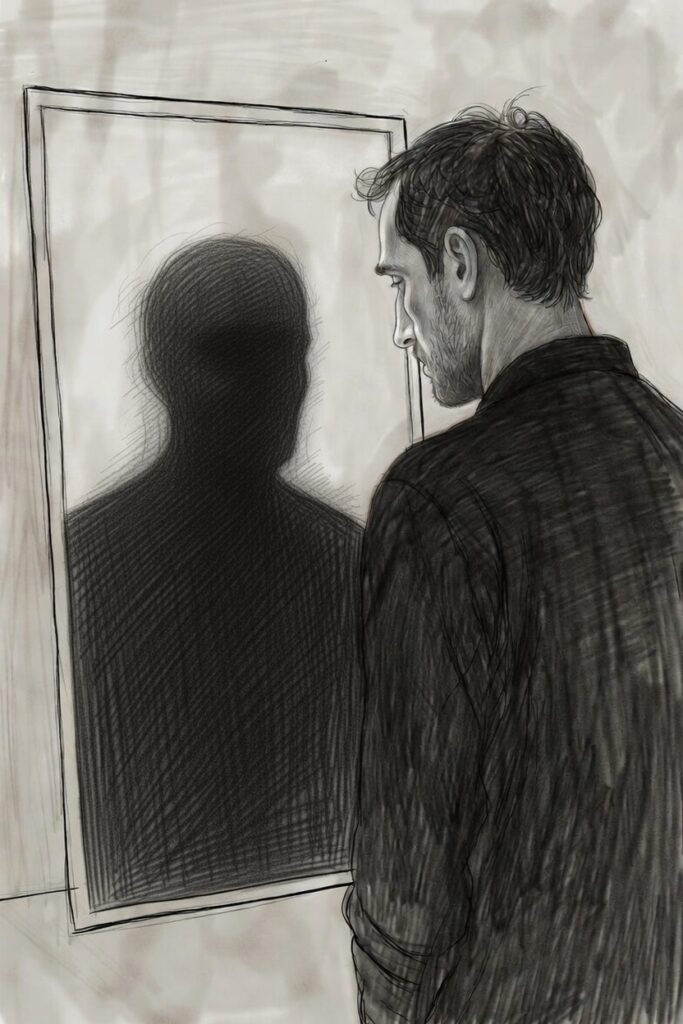
Burnout Identity Loss: When You Don’t Recognise Yourself Anymore
There’s a quiet moment many people experience during burnout.
You catch yourself reacting differently.
You stop caring about things that once mattered.
You feel distant from your own life.
And the thought appears:
“I don’t recognise myself anymore.”
This isn’t dramatic.
It isn’t a failure.
It’s often burnout and identity loss.
Burnout doesn’t only drain energy — it can change how you see yourself.
Burnout Changes More Than Energy
Most people think burnout is exhaustion.
But burnout affects:
Your motivation
Your emotional range
Your sense of purpose
Your identity
When you’ve been carrying responsibility, pressure, or mental load for a long time, you adapt by narrowing your focus.
You stop asking what you want.
You focus on what needs to be done.
Over time, that shift creates distance between who you are and how you live.
You’re still functioning.
But you feel unfamiliar to yourself.
Why Burnout Creates Identity Loss
Identity isn’t fixed.
It’s built from choices, preferences, relationships, and experiences.
Burnout reduces capacity for all of those.
You may notice:
Less curiosity
Less creativity
Less emotional presence
Less connection to personal goals
Your life becomes operational.
Tasks replace meaning.
Responsibility replaces expression.
That doesn’t mean your identity disappeared.
It means it’s been overshadowed by survival.
The Subtle Signs You’re Losing Yourself
Burnout identity loss rarely feels dramatic.
It shows up quietly:
You don’t know what you enjoy anymore
You struggle to make simple personal decisions
You feel detached from hobbies or interests
You feel like you’re performing your own life
You miss a version of yourself you can’t clearly describe
Many people describe this as a feeling of numbness, flatness, or distance.
That experience closely aligns with emotional changes in burnout.
You can read more here:
👉 Emotional Numbness Is a Burnout Symptom
Identity loss often follows emotional depletion.
Functioning Doesn’t Mean You’re Connected
One of the most confusing parts of burnout identity loss is that life can still look fine.
You might still:
Work
Care for family
Train (like you do with BJJ, Bojan — showing up doesn’t always mean you feel like yourself)
Handle responsibilities
Meet expectations
But internally, something feels missing.
That gap creates the feeling of unfamiliarity.
High-functioning burnout often hides identity changes because performance continues.
Related:
👉 High-Functioning Burnout Is Still Burnout
Identity Loss Isn’t Permanent
This is important.
Burnout doesn’t erase identity.
It suppresses it.
Your nervous system shifts into efficiency mode.
Expression becomes secondary.
When pressure reduces and capacity returns, identity begins to reappear — often gradually.
Small signals show this:
Moments of curiosity
Wanting quiet
Remembering old interests
Feeling emotion again
Questioning routines
These are not signs that something is wrong.
They’re signs something is coming back.
Why Trying to “Fix Yourself” Makes It Worse
When people feel disconnected from themselves, they often try to force clarity.
They ask:
“What do I want?”
“What’s wrong with me?”
“How do I get back to normal?”
But burnout recovery doesn’t work through pressure.
Identity returns through safety, not urgency.
Instead of forcing answers, helpful approaches include:
Reducing unnecessary load
Allowing slower decision-making
Reintroducing small preferences
Noticing moments of interest without acting on them
Creating space without expecting transformation
Identity rebuilds through exposure to experience, not analysis alone.
Reconnecting With Yourself Happens Gradually
There isn’t a moment where you suddenly “find yourself.”
It’s quieter.
You laugh more naturally.
You feel slightly more present.
You notice opinions forming again.
You feel small excitement about ordinary things.
These shifts are easy to dismiss.
But they’re meaningful.
Burnout identity loss reverses slowly, in the same way it developed.
When You Don’t Recognise Yourself, It’s Information
Feeling unfamiliar to yourself doesn’t mean you’re broken.
It means something in your life has required adaptation for too long.
Burnout identity loss is feedback.
It says:
Your capacity has been exceeded.
Your needs were deprioritised.
Your nervous system shifted into survival.
The goal isn’t becoming your “old self.”
Because life changed.
The goal is to become a version of yourself that includes your limits.
That version is usually more stable — not less.
You Haven’t Disappeared
Burnout can make you feel like you’ve lost something essential.
But identity doesn’t vanish.
It waits.
Under reduced pressure, safety, and time, it returns — often with more clarity than before.
Not as who you were.
But as someone who understands what they need.
And that recognition — even small — is the beginning of reconnection.
According to the World Health Organisation, burnout is linked to chronic workplace stress.
Link “World Health Organisation” to:
https://www.who.int/.