
Recovery Isn’t Linear: Why You Feel Better — Then Worse
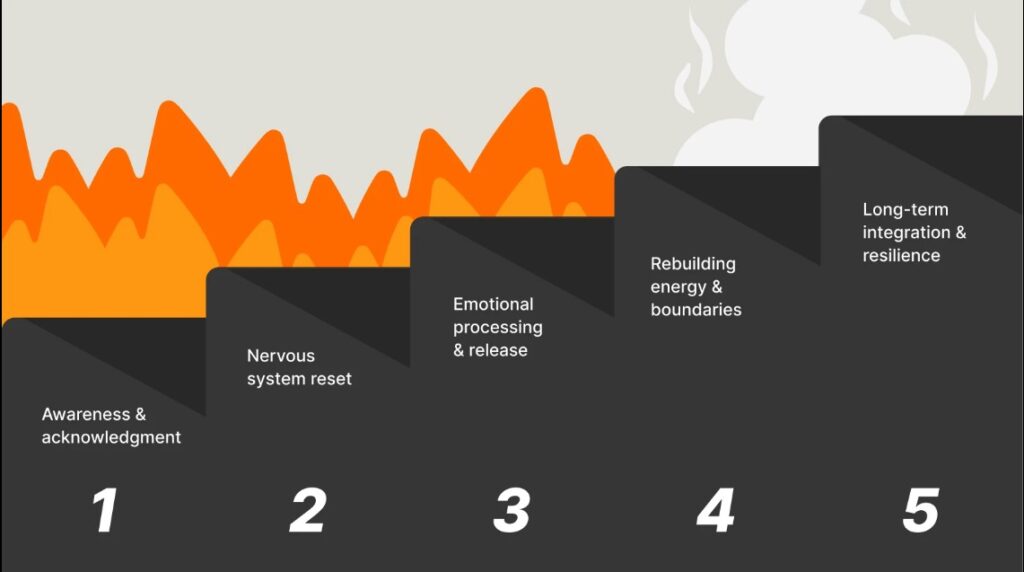
Burnout recovery rarely follows the path people expect.
Table of Contents
Most of us imagine healing as something that steadily improves over time.
You feel exhausted, you rest, you make changes, and gradually things get better.
Energy returns.
Clarity returns.
Life slowly begins to feel manageable again.
But burnout recovery almost never works that way.
Instead, many people experience something confusing:
You start to feel better…
Then suddenly you feel worse again.
You might have a few good days where your mind feels lighter, and your body feels calmer.
Then, without warning, exhaustion returns. Irritability comes back. Motivation drops.
It can feel like everything you did to recover suddenly stopped working.
This pattern often leads to a discouraging thought:
“I thought I was getting better. Why am I back here again?”
The truth is that this experience is incredibly common in burnout recovery.
Healing is rarely a straight line.
It moves in waves.
Understanding why recovery works this way can make the process far less confusing — and far less discouraging.
Because feeling worse after feeling better doesn’t mean you’re failing.
Often, it means your nervous system is still recalibrating.
Why We Expect Recovery to Be Linear
Many people unconsciously expect recovery to follow a clear upward path.
This expectation comes from the way improvement is usually described in everyday life.
We’re taught that if you do the right things — rest, exercise, eat well, set boundaries — you should steadily improve.
Progress is imagined like a graph:
Start low → gradually rise → reach stability.
This idea works reasonably well for certain physical injuries.
If you break a bone, healing tends to follow a somewhat predictable trajectory.
But burnout is different.
Burnout isn’t just exhaustion.
It involves changes in stress regulation, emotional processing, motivation, and nervous system activation.
In other words, burnout recovery involves your entire stress system slowly recalibrating.
And systems rarely recalibrate in straight lines.
They move forward, pause, fluctuate, and sometimes temporarily regress.
The nervous system, especially after prolonged stress, doesn’t simply switch back to normal.
It gradually relearns safety, balance, and stability.
And that process includes ups and downs.
The “Better Than Worse” Pattern
One of the most confusing parts of burnout recovery is the sudden return of symptoms after a period of improvement.
You may experience something like this:
For a few days or weeks, you feel noticeably better.
You wake up with slightly more energy.
Your thoughts feel less heavy.
Small tasks feel manageable again.
You might even begin thinking:
“Maybe I’m finally recovering.”
Then something changes.
Fatigue returns.
Your mood drops.
Concentration becomes difficult again.
Sometimes it happens after a stressful event.
Sometimes it seems to happen for no obvious reason.
This shift can feel incredibly discouraging.
It’s easy to assume that something went wrong.
But in reality, this fluctuation is often part of the nervous system adjusting to new levels of stress and rest.
Recovery rarely happens in one continuous climb.
It happens in cycles.
Burnout affects the nervous system, which is why sleep alone doesn’t always restore energy. Even after eight hours of rest, many people still feel drained, as explained in Burnout and Sleep: Why You’re Still Tired After 8 Hours.
Why Burnout Recovery Moves in Waves
There are several reasons burnout recovery tends to move in waves rather than in a straight line.
Understanding these factors can help normalise the experience.
1. Your Nervous System Is Recalibrating
Burnout pushes the nervous system into prolonged stress activation.
Even when you begin resting or reducing pressure, your body doesn’t immediately return to balance.
Stress hormones, emotional processing patterns, and energy regulation all take time to stabilise.
Your nervous system may briefly settle into a calmer state, which feels like improvement.
But then it may reactivate old stress patterns before stabilising again.
These temporary regressions are part of the recalibration process.
It’s similar to how muscles feel sore during physical recovery.
The system is adjusting.
2. Energy Returns in Small Bursts
During burnout, your available mental and emotional energy becomes extremely limited.
As recovery begins, energy often returns in small bursts rather than full restoration.
You might feel capable for a few days and begin doing more activities again.
But if your energy system hasn’t fully rebuilt yet, those activities can temporarily drain you again.
This can create the feeling of progress followed by a setback.
In reality, your capacity is simply expanding slowly.
Your system is testing its limits.
3. Emotional Processing Starts to Reopen
Burnout often suppresses emotions.
When people are deeply burned out, they frequently report emotional numbness or detachment.
As recovery begins, emotional awareness gradually returns.
At first, this may feel like an improvement.
But as emotions reopen, unresolved stress, frustration, grief, or resentment can surface.
This doesn’t mean things are getting worse.
It often means your mind is finally processing experiences that were previously pushed aside just to survive.
Recovery sometimes brings feelings back online.
And that can temporarily feel heavier.
4. Your Brain Is Learning New Patterns
Burnout is often sustained by long-standing patterns:
Overworking
People-pleasing
Constant responsibility
Ignoring personal limits
When recovery begins, many people try to change these patterns.
But new behavioural patterns take time to integrate.
Your brain has been wired for survival mode.
Shifting out of that mode involves trial and error.
You may make changes that feel helpful at first, then realise adjustments are still needed.
This learning process naturally includes fluctuations.
The Psychological Impact of Setbacks
One of the hardest parts of burnout recovery isn’t the fluctuation itself.
It’s how people interpret those fluctuations.
When symptoms return after improvement, many people assume they’ve failed.
Thoughts often appear like:
“I was doing better. Now I’m back to square one.”
“I guess nothing is working.”
“Maybe this is just how I am now.”
These interpretations can create additional emotional weight.
But most of the time, they’re inaccurate.
Recovery rarely resets completely.
Even when symptoms return, you’re often still further along than before.
What feels like regression is often simply a temporary dip within a longer recovery process.
Many people experience emotional shutdown during burnout. If this feels familiar, you may relate to Emotional Numbness Is a Burnout Symptom.
Progress in Burnout Recovery Often Looks Like This
Instead of a straight line, recovery often looks more like waves that gradually move upward over time.
For example:
At the beginning, exhaustion may be constant.
Later, you might experience:
A few hours of relief during the day.
Then a few days where things feel lighter.
Then a week where you feel relatively stable.
Fluctuations still happen, but the overall baseline slowly improves.
The difficult days don’t disappear immediately.
But they usually become less frequent or less intense over time.
This gradual shift is a more realistic picture of burnout recovery.
Why Feeling Better Can Sometimes Trigger a Dip
Another surprising pattern many people experience is feeling worse shortly after a period of improvement.
This can happen for several reasons.
You Start Doing More Too Soon
When energy returns, it’s natural to resume responsibilities or commitments.
But if your nervous system hasn’t fully recovered yet, increasing activity too quickly can lead to renewed exhaustion.
This isn’t failure.
It simply means your recovery pace needs to remain gradual.
Your Body Releases Stored Stress
During deep burnout, many people operate in a state of emotional suppression.
As safety returns, the nervous system sometimes releases accumulated stress.
This can manifest as fatigue, irritability, emotional fluctuations, or sudden sadness.
It may feel like things are getting worse.
But often it’s the body finally processing what it held for a long time.
Your Expectations Increase
Once improvement begins, expectations often rise.
You may expect yourself to return to full productivity or normal functioning quickly.
When energy fluctuates again, it can feel disappointing.
But this expectation itself can create pressure that slows recovery.
Healing tends to move best when pressure stays low.
The Difference Between a Setback and a Collapse
It’s important to distinguish between two different experiences during recovery.
A temporary setback is a short-term dip in energy or mood.
You may feel tired, overwhelmed, or emotionally heavy again for a few days.
But eventually your system stabilises.
A collapse, on the other hand, is when burnout deepens again because the underlying conditions haven’t changed.
For example:
Returning to an extreme workload
Continuing to ignore personal limits
Remaining in a chronically stressful environment
In those cases, burnout can worsen again.
But many fluctuations during recovery are not collapses.
They are simply temporary dips while the system stabilises.
What Actually Helps When Recovery Fluctuates
Understanding that recovery isn’t linear can already reduce some of the frustration.
But there are also practical ways to navigate the ups and downs more gently.
1. Pace Your Energy
One of the most helpful approaches during recovery is pacing.
Instead of using all available energy when you feel better, try leaving some energy unused.
This helps prevent the boom-and-bust cycle where good days are followed by exhaustion.
Small, steady increases in activity tend to stabilise recovery more effectively.
2. Track Trends, Not Days
Burnout recovery is easier to understand when you look at longer patterns rather than individual days.
A difficult day doesn’t mean you’re failing.
Ask questions like:
Are the good days becoming slightly more frequent?
Are the difficult days less intense than before?
These broader trends often reveal progress that isn’t obvious day to day.
3. Normalise Emotional Waves
If emotions resurface during recovery, it doesn’t mean you’re getting worse.
It often means your mind is finally processing experiences that were previously suppressed.
Allowing those emotions space — without immediately trying to fix them — can actually support long-term healing.
4. Adjust Expectations
Many people underestimate how long burnout recovery can take.
It’s not unusual for full nervous system recovery to take months, sometimes longer.
This doesn’t mean you’ll feel terrible the entire time.
But it does mean fluctuations are normal.
Expecting waves rather than perfection makes the process much less discouraging.
Signs Recovery Is Still Happening
Even when fluctuations occur, there are often subtle signs that recovery is progressing.
You may notice things like:
Moments of calm appear more frequently.
Slightly improved concentration.
Greater awareness of your limits.
The ability to rest without as much guilt.
Increased emotional clarity.
These small shifts are meaningful.
Burnout recovery rarely transforms everything overnight.
It gradually changes how your mind and body respond to stress.
Why Compassion Matters During Recovery
One of the most important — and often overlooked — parts of recovery is self-compassion.
Burnout often develops in people who push themselves relentlessly.
People who feel responsible for everything.
People who struggle to rest without guilt.
If those patterns continue during recovery, healing becomes much harder.
Self-compassion doesn’t mean giving up on growth.
It means allowing recovery to unfold at a realistic pace.
It means recognising that your nervous system has been under strain for a long time.
And it deserves time to recalibrate.
The Long View of Burnout Recovery
When people look back on burnout recovery months later, the process often makes more sense.
What once felt like constant setbacks begins to look more like gradual improvement.
You may realise that the dips became shorter.
Or that the overall intensity of exhaustion slowly decreased.
Recovery is rarely obvious in the moment.
But over time, the trajectory becomes clearer.
You’re Not Starting Over
Perhaps the most important thing to remember during burnout recovery is this:
Feeling worse after feeling better doesn’t mean you’re starting over.
It means your system is still adjusting.
Healing often moves in cycles.
Better → worse → stable → better again.
Each cycle helps your nervous system rebuild resilience and balance.
Progress isn’t measured by perfect consistency.
It’s measured by gradual change over time.
And even when the path feels uneven, healing can still be happening beneath the surface
Link “World Health Organisation” to:
https://www.who.int/.