
Emotional numbness is a burnout symptom that many people don’t recognise at first. When most people think about burnout, they imagine exhaustion, stress, or overwhelm. But one of the clearest signs of deeper burnout isn’t intensity — it’s absence.
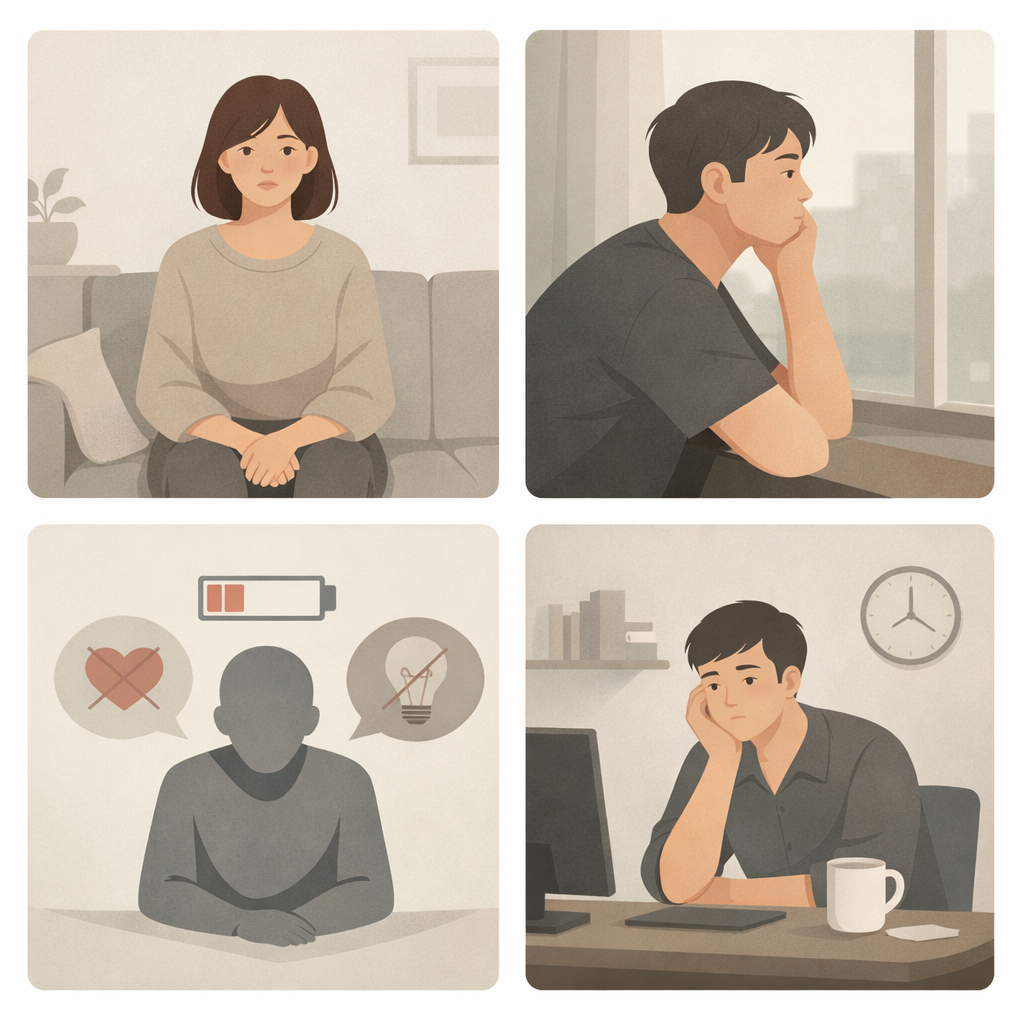
It’s the absence of feeling.
Not sadness.
Not panic.
Not even obvious frustration.
Just flatness.
And that flatness can be confusing.
You might still be going to work.
Still answering messages.
Still training.
Still showing up for your family.
On the outside, everything looks functional.
Inside, something feels switched off.
Burnout Doesn’t Always Feel Dramatic
Burnout often develops slowly. It builds over time — through responsibility, pressure, constant mental load, and the belief that stopping isn’t really an option.
At first, it may look like stress. You feel busy. Overloaded. Mentally tired.
But when stress continues without real recovery, your nervous system shifts into protection mode. Instead of staying activated, it starts conserving energy.
That’s when emotional numbness can begin.
You may notice:
- Things that used to excite you don’t land the same way
- Conversations feel harder to engage in
- Achievements feel neutral instead of satisfying
- You don’t feel deeply sad — you just don’t feel much
This isn’t a personality change.
It’s depletion.
Why Emotional Numbness Happens
When you’ve been carrying too much for too long, your system adapts.
Emotions require energy. Caring deeply requires energy. Feeling enthusiasm, joy, anger, or connection all require internal resources.
Burnout reduces those resources.
So your mind does something protective: it turns the volume down.
Emotional numbness isn’t weakness.
It isn’t coldness.
It isn’t a lack of gratitude.
It’s your nervous system trying to survive sustained overload.
This is especially common in high-functioning burnout. You can read more about that here:
High-Functioning Burnout: When You’re Performing But Empty
Because you’re still performing, no one may notice the emotional change. Sometimes you don’t notice it either — until someone says, “You seem distant,” or “You don’t react as you used to.”
Emotional Numbness vs Depression
Emotional numbness can overlap with depression, but they’re not always the same.
Depression often includes persistent low mood, hopelessness, or loss of pleasure.
Burnout-related numbness often feels more situational and tied to prolonged stress or responsibility. It can coexist with functioning. You may still meet deadlines. Still parent. Still train. Still manage your life.
But you feel disconnected from it.
The difference matters — not to label yourself, but to understand what your system is responding to.
Burnout is often about chronic pressure without space.
Numbness is the body’s way of creating that space internally when it can’t create it externally.
Why It’s Often Misunderstood
Emotional numbness doesn’t look urgent.
If you’re not crying.
If you’re not collapsing.
If you’re not visibly distressed.
It’s easy to dismiss what’s happening.
You might tell yourself:
“I’m fine.”
“I’m just tired.”
“I should be grateful.”
“Other people have it worse.”
But numbness is information.
It’s a sign that something has been stretched for too long.
Many people experiencing numbness also feel guilt — especially if life looks “good” on paper. Stable job. Family. Routine. Responsibilities handled.
But burnout doesn’t require catastrophe.
It requires sustained overload.
You can read more about how burnout differs from regular stress here:
The Difference Between Stress and Burnout
Understanding that difference often brings relief. It explains why rest alone hasn’t fixed the flatness.
What Emotional Numbness Can Feel Like Day to Day
It’s subtle.
You laugh, but it feels muted.
You achieve something, but it doesn’t register.
You’re with people, but feel slightly outside the moment.
Sometimes irritation replaces feeling.
Sometimes withdrawal.
Sometimes quiet detachment.
You may scroll more.
Avoid deeper conversations.
Delay things that once mattered.
Not because you don’t care.
Because caring feels heavy.
And the system is already overloaded.
What Helps (Without Forcing Yourself to “Feel More”)
Trying to force emotions back rarely works.
Telling yourself to “be positive” or “be grateful” doesn’t restore capacity.
Instead, recovery often begins with reducing load.
That might mean:
- Creating small boundaries around time or energy
- Reducing unnecessary decisions
- Taking breaks without productivity goals
- Naming the burnout honestly
Emotional numbness often softens when pressure decreases — not when self-criticism increases.
It also helps to reconnect slowly with low-stakes experiences:
- Quiet walks without headphones
- Gentle movement instead of intense training
- Conversations without problem-solving
- Time outside without multitasking
Not to fix yourself.
But to give your nervous system a sense of safety again.
Numbness Is a Signal, Not a Failure
Emotional numbness is a burnout symptom.
It doesn’t mean you’re broken.
It doesn’t mean you’ve lost your personality.
It doesn’t mean you don’t love the people in your life.
It means something has been carrying more than it can sustain.
Burnout isn’t always loud.
Sometimes it’s quiet.
Flat.
Muted.
And because it’s quiet, it can last longer than it should.
Naming it is the first step.
Not to panic.
Not to self-diagnose.
But to recognise that disconnection is information.
If you’ve been feeling emotionally numb, consider this permission to pause and ask:
What have I been holding for too long?
You don’t need a dramatic collapse to justify support.
You don’t need visible distress to deserve relief.
Sometimes the most important symptoms are the quiet ones.
And emotional numbness is one of them.
Link “World Health Organisation” to:
https://www.who.int/.