
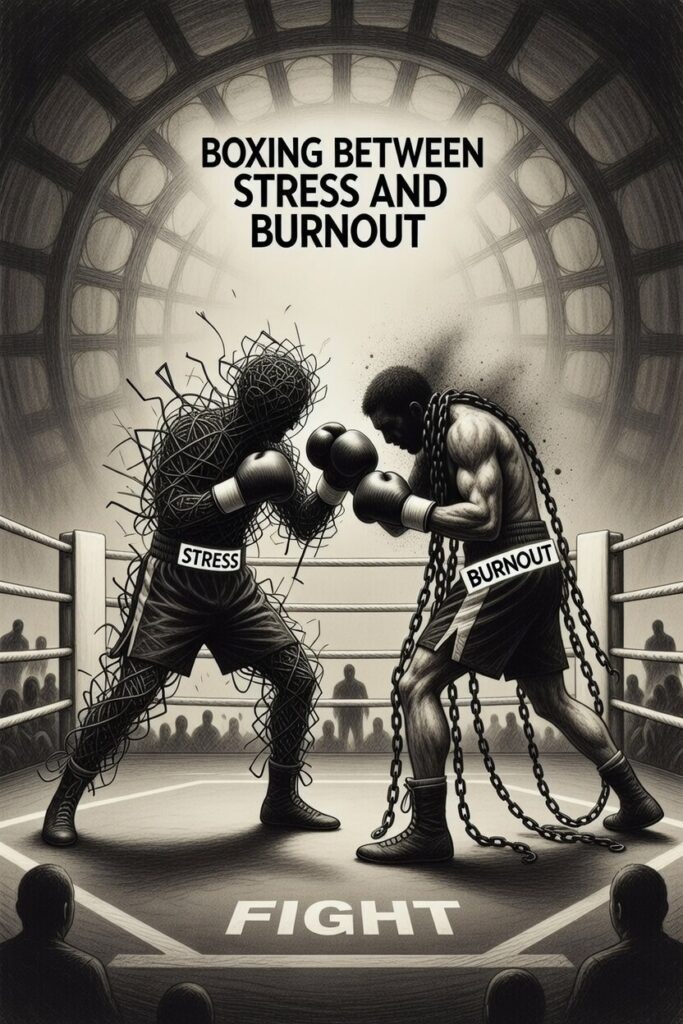
The difference between stress and burnout is often misunderstood — and confusing the two is one of the main reasons people stay stuck for years.
Stress and burnout are frequently used interchangeably.
They’re not the same thing.
And treating burnout as if it were just stress can delay real recovery.
Stress Is Usually Situational
Stress happens when there’s too much to do, too little time, or short-term pressure demanding attention.
A deadline.
A conflict.
A busy season at work.
Unexpected responsibility.
Stress feels intense. It activates your nervous system. It increases focus and urgency.
But stress is typically connected to a situation.
When the situation changes, stress often reduces.
You take a few days off.
You complete the project.
The conflict resolves.
The workload stabilises.
And your system settles.
Stress is uncomfortable — but usually temporary.
Even when overwhelmed, people experiencing stress often still feel engaged.
They may think:
“This is a lot, but I can get through it.”
“I just need a break.”
“Once this passes, I’ll be okay.”
There is still a sense of movement forward.
Burnout Is Systemic
Burnout is different.
Burnout develops slowly. It builds over months — sometimes years — of sustained responsibility, emotional load, and pressure.
It often grows in environments where stopping doesn’t feel like an option.
Burnout isn’t about one difficult week.
It’s about prolonged depletion.
Unlike stress, burnout doesn’t resolve simply because the immediate pressure lifts.
You might take time off — and still feel exhausted.
You might reduce workload — and still feel flat.
You might sleep more — and still wake up drained.
That’s because burnout isn’t just fatigue.
It’s depletion.
Burnout Isn’t Laziness
Burnout is often misinterpreted — by others and by the person experiencing it.
From the outside, it can look like:
Lack of motivation
Procrastination
Irritability
Withdrawal
But internally, burnout feels like:
Emotional numbness
Reduced capacity
Cognitive slowdown
Persistent exhaustion
With stress, people often feel:
– Overwhelmed but still motivated
– Anxious but responsive
– Tired, yet able to recover with rest
With burnout, people often feel:
– Emotionally flat or detached
– Disconnected from things that used to matter
– Exhausted even after sleeping
– Irritable over small demands
– Quietly resentful or trapped
Stress asks for relief.
Burnout asks for understanding.
The Role of Control
Another key difference between stress and burnout is the sense of control.
When stressed, there’s still a belief that action matters.
You might feel stretched — but you believe effort will change the outcome.
With burnout, that belief weakens.
Demands continue, but internal capacity fades.
There’s often a subtle shift from:
“This is hard.”
to
“What’s the point?”
That shift matters.
Burnout carries a sense of being trapped. Responsibilities remain, but the emotional connection to them thins out.
This is why advice like “just take a break” or “push through” often fails.
It treats burnout as if it were stress.
But they require different responses.
How Burnout Affects Everyday Functioning
Stress may feel chaotic, but you can usually still function.
Burnout affects basic cognitive processes.
Decision-making slows.
Initiating tasks feels harder.
Small choices feel disproportionately heavy.
Many people notice this shift in subtle ways.
They hesitate before replying to messages.
They avoid minor tasks.
They struggle to decide what to eat.
This is explored more deeply in
👉 Why Burnout Makes Small Decisions Feel Impossible
When everyday decisions begin to feel overwhelming, it’s often a sign that capacity — not character — is the issue.
Why Confusing Stress and Burnout Keeps People Stuck
When burnout is mistaken for stress, people try to solve it with short-term relief.
They:
Take a weekend off
Book a holiday
Try to reorganise
Push harder for productivity
But if the root issue is systemic depletion, those strategies provide only temporary relief.
The exhaustion returns.
The disconnection remains.
The irritability lingers.
Understanding the difference between stress and burnout isn’t about labels.
It’s about applying the right approach.
Stress responds to rest and resolution.
Burnout requires reduction of sustained pressure — and often a deeper shift in how responsibility and identity are carried.
So What Are You Actually Experiencing?
If pressure feels temporary and tied to a specific situation, it may be stress.
If exhaustion feels chronic, emotional flatness is increasing, and relief doesn’t fully restore you — it may be burnout.
Burnout rarely announces itself dramatically.
It builds quietly.
It hides inside responsibility.
It disguises itself as discipline.
It grows where “I’ll rest later” becomes a pattern.
Recognising the difference is the first step toward responding appropriately.
Because you can’t treat systemic depletion with temporary tools.
And you don’t fix burnout by pretending it’s just stress.
According to the World Health Organisation, burnout is linked to chronic workplace stress
According to the World Health Organisation, burnout is linked to chronic workplace stress.
Link “World Health Organisation” to:
https://www.who.int/.